


Key Takeaways
- A PP extrusion plant converts polypropylene into flat tape and fibrillated yarn for various industrial applications.
- Key components include the extruder, die, stretching section, and winding system crucial for production efficiency.
- Understanding the PP extrusion plant process helps manufacturers select appropriate equipment for their specific needs.
- Aawadkrupa Plastomech Pvt. Ltd. offers a range of PP extrusion plant models tailored to diverse production capacities.
- Fibrillated yarn produced is ideal for making durable products like ropes, bags, and geotextiles.
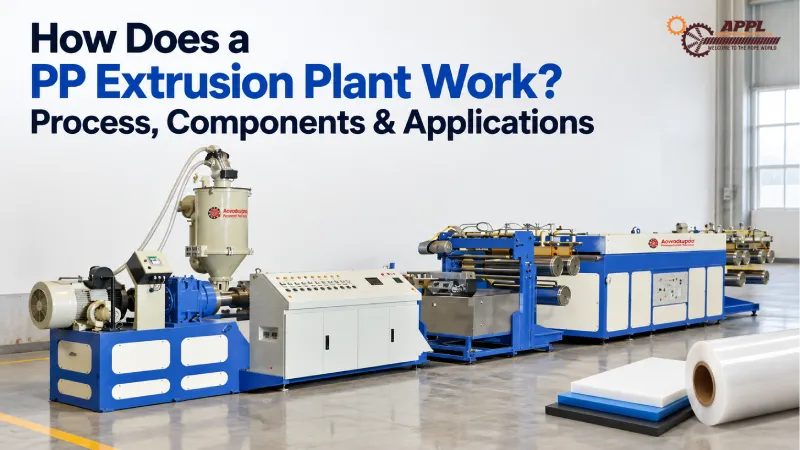
Aawadkrupa Plastomech Pvt. Ltd. is a leading manufacturer of PP Tape Fibrillating Extrusion Plant. A modern PP extrusion Plant converts polypropylene material into a flat tape that can be stretched and fibrillated to produce a fine mesh-like yarn structure. For manufacturers serving rope, bag, net, geotextile and industrial fabric markets, understanding this process helps in selecting the right extrusion system.
What Is a PP Extrusion Plant?
A PP extrusion Plant is a production system used to process polypropylene into tape and then into fibrillated yarn. In the fibrillating process, polypropylene is melted and extruded through a die to form a flat ribbon. The ribbon is then stretched and fibrillated so that its structure develops into a network of fine fibers.
The key purpose of the plant is to convert polymer material into a usable, consistent tape-based yarn for downstream manufacturing. The finished fibrillated yarn is used in products where strength, light weight, abrasion resistance and resistance to chemicals and UV exposure are useful.
How Does a PP Extrusion Plant Work?
The production process follows a sequence of controlled operations. A typical PP tape fibrillating extrusion line works through these main stages:
- Material Feeding : Polypropylene and other specified raw materials are introduced into the extrusion system. The machine configuration listed by Aawadkrupa can process PP, while its special screw design is also stated to support LDPE and HDPE processing.
- Melting and Extrusion : The material moves through the extruder, where it is melted and pushed through a die. The die forms the molten material into a flat, ribbon-like tape.
- Tape Formation : The extruded material develops into a flat tape structure suitable for the next production stage. Proper control of the extrusion system is important for maintaining a consistent tape output.
- Stretching : The tape is stretched as part of the fibrillating process. This changes its structure and prepares it for the formation of fine interconnected fibers.
- Fibrillation : The stretched tape passes through the fibrillating stage, including a hot air oven according to the manufacturer’s process description. This creates a fine mesh of thin fibers.
- Winding : The resulting fibrillated yarn is wound onto spools for handling and use in downstream applications such as ropes, bags and nets.
Major Components of a PP Extrusion Plant
A PP extrusion Plant combines several sections that work together as one continuous production system. The main components and functions include:
- Extruder: Melts and conveys the polymer material through the production line.
- Screw and Barrel: Handle material movement and melting inside the extrusion section.
- Die: Forms the melted polymer into a flat tape or ribbon structure.
- Stretching Section: Stretches the tape before fibrillation.
- Hot Air Oven: Supports the fibrillating process described for the plant.
- Fibrillation Section: Develops the mesh-like structure of fine fibers.
- Winding Section: Collects the finished fibrillated yarn onto spools.
- PLC-HMI System: Provides machine operation and control, with recipe-saving and production-reporting functions listed by the manufacturer.
For automated operation, the plant page also lists AC inverter and motor synchronization, online monitoring and service support, Wi-Fi connectivity, safety alert and interlocking systems, and an inbuilt user manual and troubleshooting function.
Available PP Tape Fibrillating Plant Models
For B2B buyers, production capacity is an important factor while selecting equipment. Aawadkrupa lists multiple models with different screw sizes and stated production capacities.
| Model | Size | Production Capacity |
|---|---|---|
| APPL/PP-65 AC | 65 mm | 60 kg/hr |
| APPL/PP-75 AC | 75 mm | 120 kg/hr |
| APPL/PP-90 AC | 90 mm | 150 kg/hr |
| APPL/PP-100 AC | 100 mm | 200 kg/hr |
| APPL/PP-110 AC | 110 mm | 250 kg/hr |
| APPL/PP-120 AC | 120 mm | 350 kg/hr |
| APPL/PP-80 GF | 80 mm | 250 kg/hr |
Buyers should match the selected model with the required output and product specifications.
Key Features to Consider
When evaluating equipment from PP extrusion Plant Manufacturers, buyers should look beyond basic extrusion and review the control and processing features that affect day-to-day operation.
Some listed features of the Aawadkrupa plant include:
- Extra strength and shining of the tape
- Longer screw and barrel life
- AC inverter and synchronized motor operation
- Lower noise and power consumption
- Processing capability for PP, LDPE and HDPE
- PLC-HMI operation
- Recipe saving and production reports
- Online monitoring and service support
- Safety alerts and interlocking
- Inbuilt troubleshooting and user manual
A suitable plant configuration should align with the material, required yarn characteristics, production capacity and intended end product.
Applications of Fibrillated Yarn
One reason a PP extrusion Plant is valuable for plastic yarn manufacturers is its ability to produce material for different downstream applications. According to the product information, fibrillated yarn can be used for:
- Bags
- Ropes
- Nets
- Geotextiles
- Carpet backing
- Industrial fabrics
The material characteristics described by the manufacturer include high strength, low weight, chemical resistance, UV resistance and good abrasion resistance. These properties make fibrillated yarn suitable for applications that require durable and practical synthetic yarn structures.
How to Select the Right Plant
When comparing PP extrusion Plant Manufacturers, production requirements should guide the final machine selection. Start by defining the expected output, material type and the type of fibrillated yarn needed for your application.
- Check the required production capacity
- Confirm compatible raw materials
- Review screw and barrel specifications
- Check PLC-HMI and automation features
- Evaluate safety and monitoring functions
- Match the machine with your downstream product requirements
A clear understanding of these points can make machinery selection more practical and reduce the chance of choosing a configuration that does not match your manufacturing needs.
Why Choose Us
Aawadkrupa Plastomech Pvt. Ltd. provides a PP Tape Fibrillating Extrusion Plant designed for producing fibrillated yarn from polypropylene tapes. Our range includes multiple machine configurations and production capacities, along with features such as PLC-HMI operation, recipe saving, online monitoring, safety interlocking and synchronized drive systems. We focus on practical extrusion machinery for applications including ropes, bags, nets, geotextiles and industrial fabrics.
Conclusion
A PP extrusion Plant works through a connected sequence of material feeding, melting, extrusion, tape formation, stretching, fibrillation and winding. The result is fibrillated yarn that can be used for different industrial products. For manufacturers, the right equipment depends on production capacity, raw material requirements, automation features and the intended application.
With several listed models and configurations, Aawadkrupa Plastomech Pvt. Ltd. offers a range that can be evaluated according to specific manufacturing requirements. Businesses looking for reliable extrusion equipment can discuss their production needs with our team before selecting the appropriate plant configuration.
Looking for a suitable PP Tape Fibrillating Extrusion Plant for your manufacturing setup? Contact Aawadkrupa Plastomech Pvt. Ltd. to discuss your requirements and select the right machine configuration.
Call: +91 9510186014
Email: info@akiropes.com
Frequently Asked Questions
What is the main function of a PP extrusion plant?
The main function of a PP extrusion plant is to convert polypropylene material into usable tape and fibrillated yarn. This process involves melting, extruding, and treating the material to produce a flat tape that can be further processed into fine fibers used in various applications.
How does a PP extrusion plant operate?
A PP extrusion plant operates through a series of controlled steps, including material feeding, melting, extrusion, tape formation, stretching, fibrillation, and winding. Each stage is crucial for ensuring the production of high-quality fibrillated yarn.
What are the key components of a PP extrusion plant?
The key components include the extruder, screw and barrel, die, stretching section, hot air oven, fibrillation section, winding section, and a PLC-HMI system for operation control. Each part plays a specific role in transforming raw polypropylene into finished yarn.
Why should I consider PP extrusion plant manufacturers?
When looking for a PP extrusion plant, it's essential to consider manufacturers for their expertise and understanding of different production requirements. Manufacturer selections should be based on their offered features, production capacity, and compatibility with your specific material needs.
What applications benefit from the fibrillated yarn produced by a PP extrusion plant?
Fibrillated yarn produced by a PP extrusion plant is widely used in applications such as bags, ropes, nets, geotextiles, carpet backing, and industrial fabrics. The durability and flexibility of the yarn make it suitable for industries requiring versatile synthetic materials.