1. Yarn Quality:
The performance of our Inflow Twister Machine is influenced by the quality of the yarns used, impacting the final product’s strength and consistency.
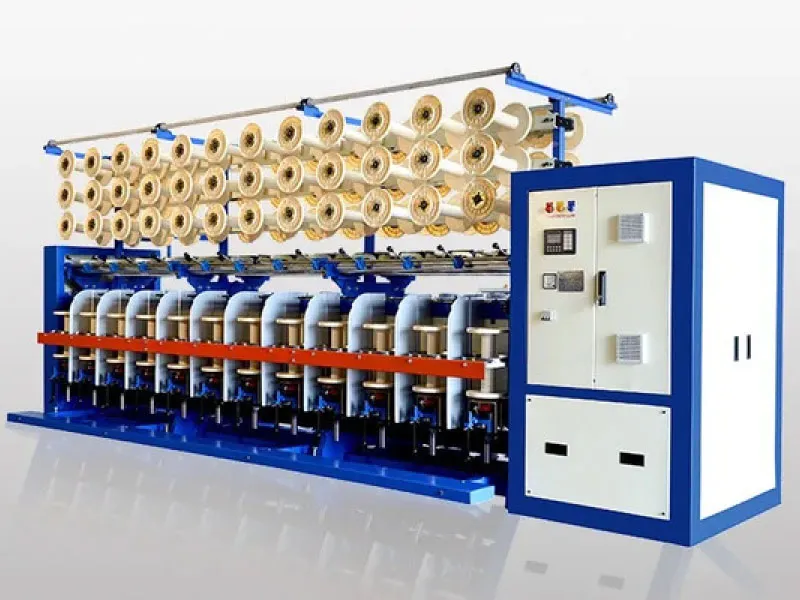
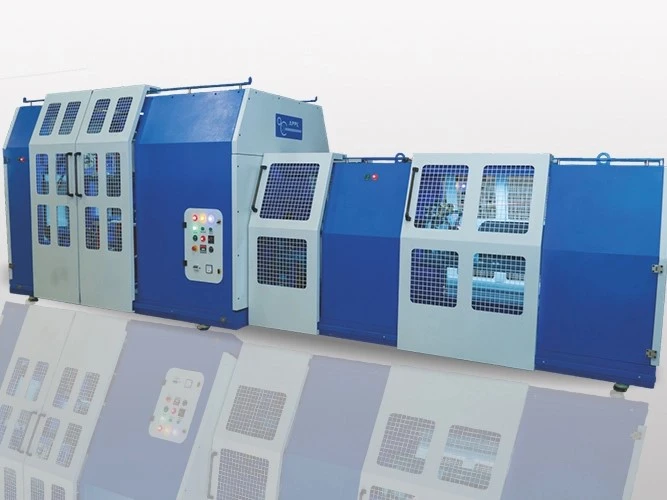
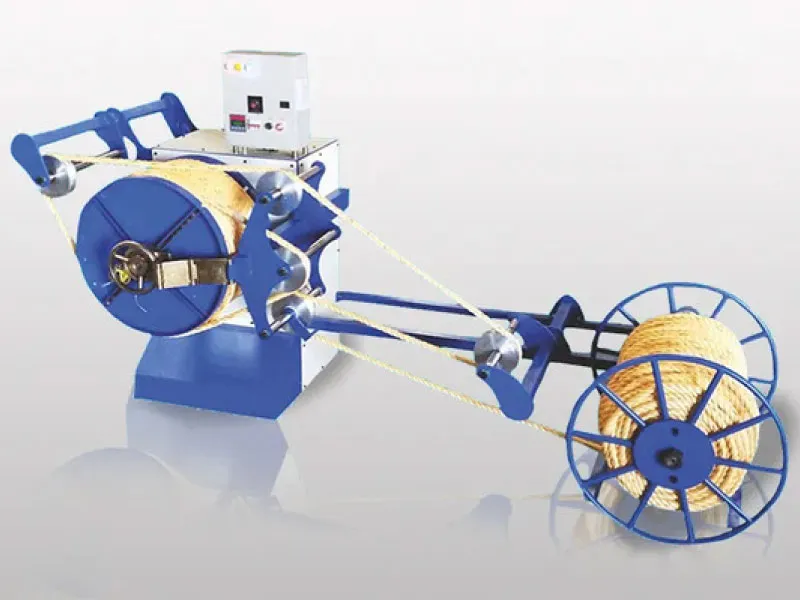
At Aawadkrupa Plastomech Pvt. Ltd., we are proud to offer our top-quality Inflow Twister Machine, which is designed for twisting and creating cross-wound packages of flat filaments. This machine is important for producing strong and durable threads from materials like cotton, wool, silk, and synthetic fibers. It is commonly used in conjunction with PP Fibrillated Tape Extrusion Lines to make Baler Twine, perfect for various textile applications.
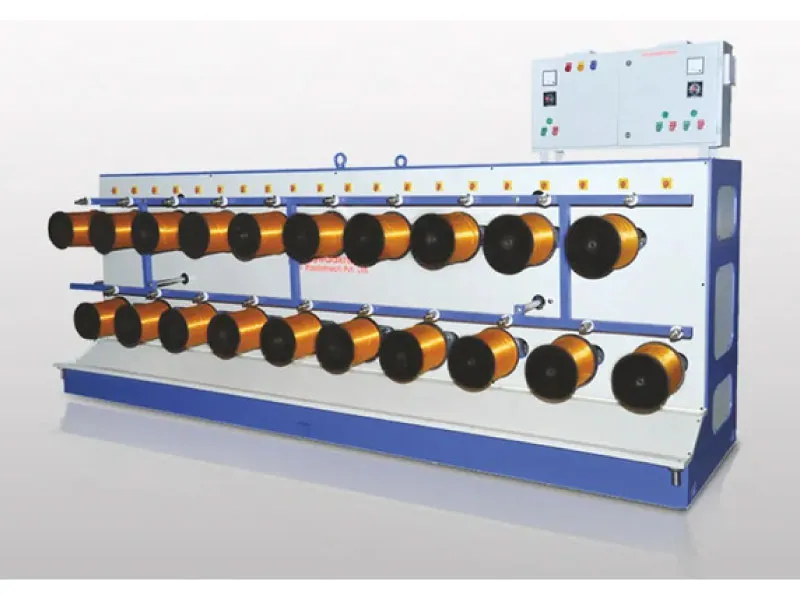
Our Inflow Twister Machine works by feeding yarns from different bobbins through rollers that control tension and guide them into the twisting zone. Here, rotating spindles twist the yarns together at high speeds, resulting in a superior thread quality. The twisted yarn is then neatly wound onto bobbins or cones for storage or more processing.
Factors that can impact the performance of our Inflow Twister Machine include the quality of the yarns, machine speed and tension settings, environmental conditions like temperature and humidity, and regular maintenance. Your trusted Aawadkrupa Plastomech Pvt. Ltd. for reliable and efficient Inflow Twister Machine that improve your textile production processes.
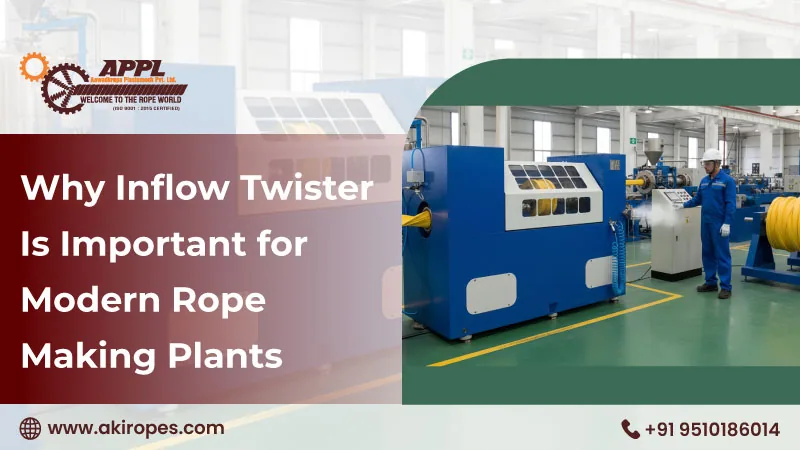
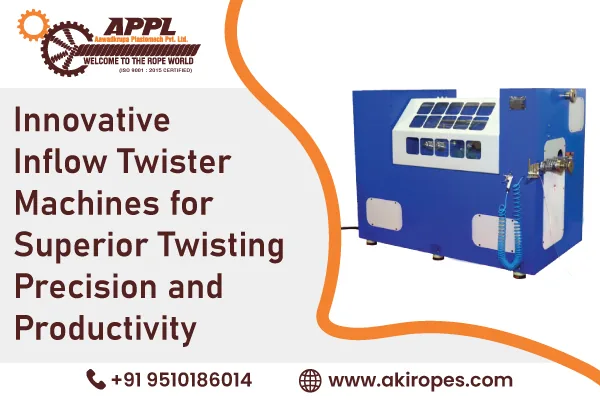
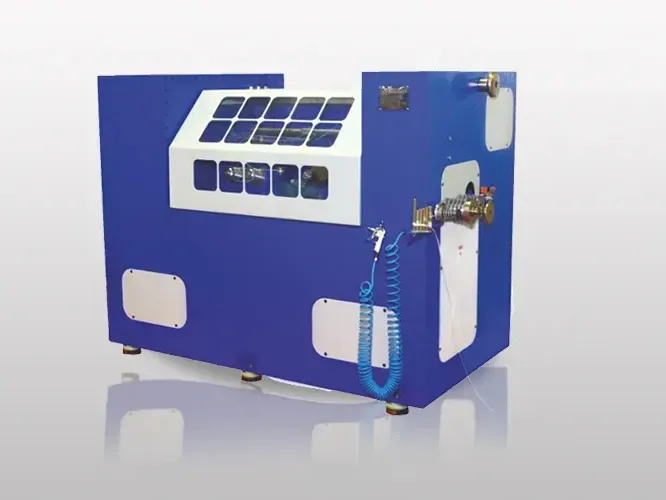
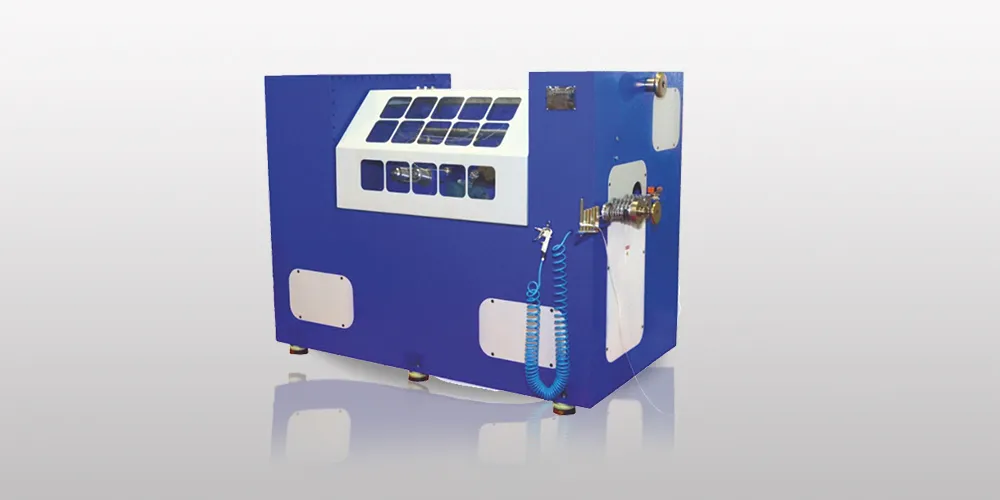
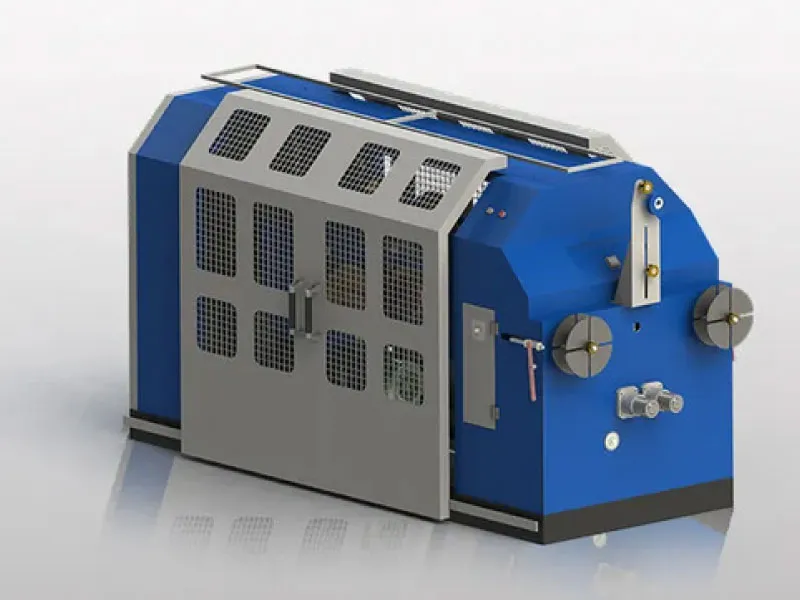
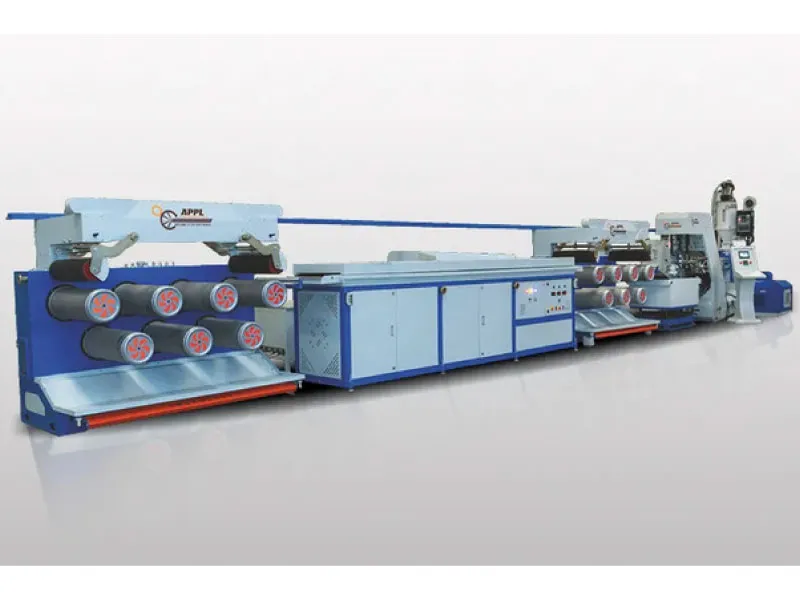
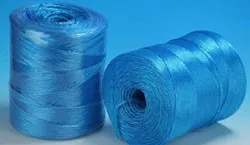
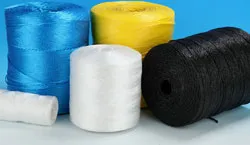
Inflow Twister is used to Twist and make Cross Winded packages ( with or without core/Paper Tube ) of the Flat filament feeding from outside Creel. This Machine is mainly used with PP Fibrillated Tape Extrusion Line for making Baler Twine (Bailing Twine).
Machine Description: Inflow Twister
Model no.: APPL/IF-100
The performance of our Inflow Twister Machine is influenced by the quality of the yarns used, impacting the final product’s strength and consistency.
Proper adjustment of machine speed and tension settings is essential for optimal performance and to avoid yarn breakage or uneven twisting.
Factors like temperature and humidity can affect yarn behavior during twisting, making it important to maintain ideal environmental conditions.
Ensuring the machine is regularly serviced and maintained helps prevent breakdowns, ensuring smooth and efficient operation.
Our Inflow Twister Machines are designed to enhance textile production processes with reliable performance and efficiency.
Our Monofilament Extrusion Plants are designed for well-organized and high-speed production, enabling you to increase your output and meet market demands effectively.
Our machines are built with precision engineering to ensure consistent and high-quality monofilament fibers, meeting industry standards and customer expectations.
We offer customization options to adapt our Monofilament Extrusion Plants to your specific requirements, ensuring that the machinery meets your unique production needs.
Our Monofilament Extrusion Plants are designed to optimize energy consumption, helping you reduce operational costs and improve sustainability.
Built with high-quality materials and components, our machines are durable and reliable, offering long-term performance with minimal downtime.
We provide comprehensive technical support and after-sales service to ensure that your Monofilament Extrusion Plant operates smoothly and efficiently.
Fill out the below form and our experts will touch with you within 24 hours.
An inflow twister is used for twisting yarns of various materials such as cotton, wool, silk, and synthetic fibers. The machine twists the yarns together to create a stronger, more durable thread that is better suited for use in textiles such as clothing, linens, and upholstery.
An inflow twister works by feeding yarns from multiple bobbins through a series of rollers and then twisting them together at high speeds. The yarns are first fed through a tensioning device to ensure they are pulled evenly, then through a series of rollers to control the yarn tension and guide them into the twisting zone. The twisting zone consists of a series of rotating spindles that twist the yarns together, and the twisted yarn is then wound onto a bobbin or cone for storage or further processing.
Some of the factors that can affect the performance of an inflow twister include the quality and consistency of the yarns being used, the speed and tension of the machine, the temperature and humidity of the environment, and the maintenance and calibration of the machine.
USA | China | Japan | South Korea | Taiwan | Singapore | Malaysia | Thailand | Indonesia | Vietnam | Philippines | Sri Lanka | Bangladesh | Saudi Arabia | UAE | Turkey | Germany | France | United Kingdom | Italy | Spain | Netherlands | Poland | Switzerland | Sweden | Belgium | Austria | Norway | Denmark | Finland | Czech Republic | Hungary | Slovakia | Greece | Portugal | Romania | Bulgaria | Canada | Mexico | Brazil | Argentina | Chile | Colombia | Peru | South Africa | Nigeria | Egypt | Kenya | Algeria | Morocco | Tunisia | Ghana | Australia | New Zealand | Russia | Ukraine | Belarus | Kazakhstan | Uzbekistan | Iran | Qatar | Oman | Kuwait | Venezuela | Bolivia | Paraguay | Uruguay | Ethiopia | Tanzania | Zambia | Angola