




You walk into a production facility that’s humming with energy & instantly you’re swept up in the action. The machines are all running like a well-oiled machine, the workers are moving fast & with a real sense of purpose – & then you catch a glimpse along one side of the room of these massive spools of colourful threads just sitting there – almost like they’re waiting patiently for their turn to shine. But let’s get real – those threads don’t amount to anything on their own – they’re nothing more than raw materials, nothing special.
Then you hear the unmistakable sound of a machine whirring into action, steady & rhythmic – spinning, twisting, pulling – and before you know it, the thread starts to take shape & transform before your very eyes. It’s not long before what looked like a bunch of loose thread is transformed into a strong, uniform rope right in front of you. It’s an amazing process to watch & in a weird way it’s really satisfying.
What Is a Rope Making Machine?
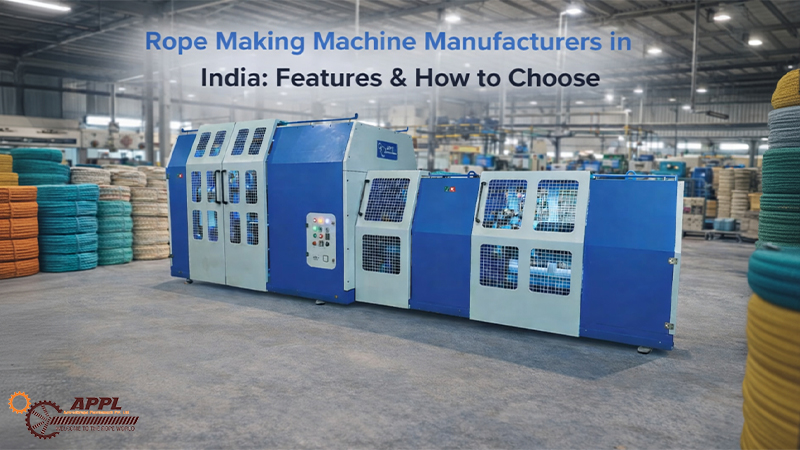
A rope making machine is specialised industrial equipment built to twist fibres into ropes of different sizes, strengths, and thickness levels.
It takes:
- yarns
- fibres
- synthetic filaments
- natural materials
Winds them together in a controlled, precise pattern. The result? Strong, uniform rope that’s ready for real-world use. The internal mechanics can be complex, sure. But the purpose is simple:
Turn loose fibres into dependable rope — fast, consistently, and at scale.
And when it comes to manufacturers in India, not every machine delivers the same output. Quality, durability, and performance can vary a lot. That’s why knowing what sets a good machine apart helps you invest smarter — and avoid expensive mistakes later.
How a Rope Making Machine Works
Inside a rope making machine, multiple strands are fed from bobbins or carriers. These strands travel through guides and are twisted together by rotating flyers or twisting drums. Some machines employ mechanical systems, while advanced models use PLC controls and automatic tensioners to maintain uniform twists per unit length. The result is a rope that meets exact standards for thickness, twist, and durability — whether it’s 4 mm thin cord or heavy-duty 55 mm rope for industrial use.
Types of Rope Making Machines
India’s diverse industries require different rope configurations, so manufacturers produce a range of machines, including:
- Machines for small diameters like 2-6 mm ropes
- Medium capacity machines like 8-16 mm
- Heavy-duty production machines for 25-55 mm ropes
Some variants come with high-speed capabilities for mass production, while others offer PLC automation and precision control.
Key Features to Look For
Choosing a great rope making machine means focusing on factors that affect performance, longevity, and ease of use. Here’s what matters most:
- Robust Build and Material Compatibility: Look for machines designed to work with a variety of fibres — from polypropylene and polyester to nylon and natural fibres. The frame and components should be made from durable materials that resist wear and tear even during high production cycles.
- Adjustable Production Parameters: A good machine lets you adjust twist speed, tension, and feeder settings. This flexibility allows manufacturers to produce ropes tailored to specific strength and elasticity requirements, reducing waste and improving quality.
- Ease of Operation and Low Maintenance: Industrial users value machines that are intuitive to operate, quick to set up, and easy to service. This means less downtime, lower training costs, and smoother production.
- Consistent Output Quality: Reliable machines produce ropes with uniform thickness, strength and twist — critical for applications where safety and performance matter. Leaders in rope machine manufacturing achieve this through precision engineering and quality control during production.
Industries That Use Rope Making Machines
These machines serve many sectors:
- Marine and shipping — ropes for towing, anchoring, mooring
- Construction — heavy-duty ropes for lifting and rigging
- Agriculture — ropes for tying, support and bundling
- Packaging and logistics — cords and ropes for securing goods
- Outdoor recreational gear — ropes used for tents and safety equipment
In every case, ropes made by well-manufactured machines are stronger, safer, and more reliable than handmade alternatives.
Choosing the Right Rope Making Machine Manufacturer
Selecting the best rope making machine manufacturer requires evaluating reputation, technical expertise, product range, and after-sales support. A company that combines advanced production facilities, quality standards, and customer service is more likely to deliver machines that last longer and perform consistently in real operational environments. India’s industry leaders have built trust through years of dependable machinery performance — and they back their products with technical help, training, and spare parts so production never falls behind.
Technological Advancements in Rope Production
The rope industry continues to evolve with automation and precision control technologies. Modern machines incorporate sensors, PLC programming and automated tensioning systems that reduce manual intervention and improve production accuracy. These advancements help manufacturers meet demand faster, reduce waste, and achieve tighter quality control than ever before.
Investment Considerations
Before investing in a rope making machine, ask yourself:
- What diameter and material range do I need?
- Do I need basic mechanical control or automation?
- What’s my production volume goal?
Understanding these helps you match the right machine to your business goals — and ensures your operations stay competitive and profitable.
Why Choose Us
You’re looking for a genuine rope making machine Manufacturer you can put your trust in. Well, Aawadkrupa Plastomech Pvt. Ltd. has been around for decades, earning a reputation for quality, technical expertise, and a genuine commitment to doing things right. As one of India’s top players, we design our machines to be tough as nails, precision engineered and built to last. We’re not just about churning out machines, though – our engineers bring a practical approach to innovation so that every investment delivers a real payback, day in and day out. And that’s not all – on top of the machines, we’ll give you the support you need to get up and running, with guidance, training and spare parts – to help your business really take off in confidence and reliability.
Conclusion
A top-notch rope making machine can revolutionize your manufacturing – it lets you turn raw materials into strong, reliable ropes that do exactly what you need them to across all sorts of industries. Getting a grip on what your production needs are, what features you really need and what to look for in a rope making machine Manufacturer makes all the difference in getting a good return on your investment and a machine that’ll last. India’s got a great bunch of manufacturers, and at the top of the list is Aawadkrupa Plastomech Pvt. Ltd., with reliable machines and a team of experts to back you up. When you choose the right equipment, you’re not just buying a machine – you’re buying into a whole package of quality, reliability and peace of mind that lets your business really thrive.
For personalised advice on rope making machines or solutions tailored to your production needs, call us at +91 9510186014 or email info@akiropes.com today.
Key Takeaways
- A rope making machine twists fibres into uniform, strong ropes for industrial use.
- China and India both produce rope making machinery, but Indian manufacturers have strong reputation for quality and support.
- Key features like material compatibility, adjustable speed and ease of use impact production and quality.
- Modern machines incorporate automation to boost efficiency and reduce waste.
- Choosing the right rope making machine manufacturer enhances reliability and production consistency.
FAQs
What materials can rope making machines handle?
Rope making machines often handle synthetic fibres like PP, nylon and polyester, and sometimes natural fibres.
Is automation necessary for rope making machines?
Automation helps boost consistency and productivity, but basic machines without automation still produce good results for lower output.
Can I produce different rope diameters on one machine?
Many machines offer settings for adjustable diameters, making them flexible for various rope sizes.
How do modern machines improve rope quality?
Advanced tension control, sensors and PLC systems help maintain uniform twist and reduce defects.
Do rope making machine manufacturers provide support?
Leading manufacturers like Aawadkrupa Plastomech Pvt. Ltd. offer support, training and replacement parts.