




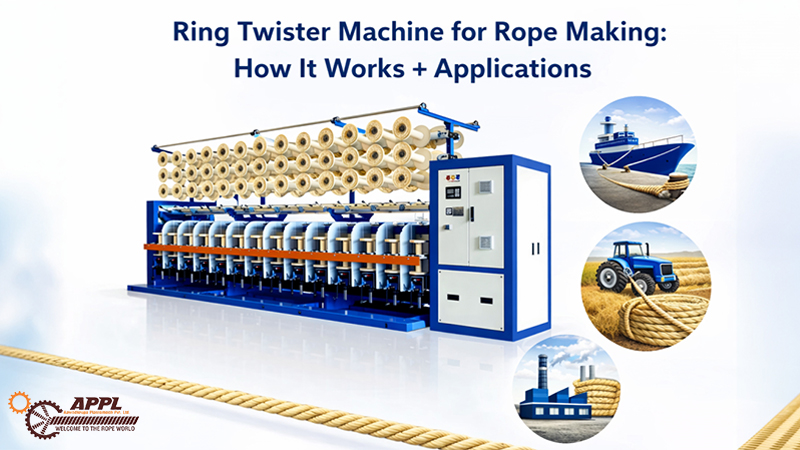
When a rope has to bear heavy loads, flex without failure, or last years in harsh environments, its strength doesn’t come from chance — it comes from design. But what makes ordinary strands turn into tough, reliable ropes? In fact, there’s a pivotal process right in the rope-making chain — twisting. And the key to doing that with excellence is a Ring Twister Machine. For decades manufacturers have used these precision machines to weave fibres and yarns into stronger, more dependable threaded products. With the right machine, output improves. Quality rises. Production headaches fade. Let’s unravel exactly how this vital invention works and why it matters so much in rope and yarn manufacturing.
What Is a Ring Twister Machine?
At its core, a Ring Twister Machine is industrial twisting equipment that takes several strands — whether yarns, wires, or filaments — and binds them together into a single unified thread or rope. The twist transforms loose fibres into a stronger, more interlocked structure with improved performance. This isn’t just about winding strands together — it’s about creating a dependable product with uniform tension, stability, and endurance.
Manufacturers such as Aawadkrupa Plastomech Pvt. Ltd. produce top-tier Ring Twister Machine models designed to handle a wide range of applications and material types, from natural fibres to technical yarns.
How Does a Ring Twister Machine Work?
The magic happens through coordinated mechanical motion and precision control:
- Input Feeding: Individual strands enter the machine through guides and rollers that set even tension.
- Twisting Action: A rotating spindle and coupled ring-traveller system wrap the strands together.
- Controlled Tension: Advanced controls maintain consistent drag and twist levels — crucial for quality output.
- Collection: The newly twisted thread is wound onto bobbins or rolls, ready for rope-making or further processing.
A ring system gives the machine remarkable control over twist density and direction — meaning flexibility for different rope types and material behaviours.
Why Twisting Is So Important
Twisting strands does more than just bind them together — it changes how the material behaves under load:
- Strength Boost: Tightly twisted yarn bears load more evenly and resists breakage.
- Shape Stability: Proper twist keeps fibres in line and prevents fraying under stress.
- Flexibility: Twisted ropes bend and move without cracking or kinking.
- Improved Wear Life: Less movement between fibres means longer life and reliability.
This is why industries from marine to construction prefer materials processed on reliable Ring Twister Machines.
Applications Across Industries
A Ring Twister Machine isn’t limited to a single niche — it’s used wherever strength and twist precision matter:
- Industrial Rope Production — from synthetic heavy cords to utility ropes.
- Textile Processing — strengthening yarns for specialised uses.
- Making stable, balanced wire strands is known as cable and wire manufacturing.
- Fishing Lines and Nets — where performance can’t be compromised.
- Farm twines and outdoor cords combine flexibility and durability.
From lightweight strands to heavy duty ropes — the right twist makes all the difference.
Key Features of Modern Ring Twister Machines
Machines manufactured by Aawadkrupa Plastomech Pvt. Ltd. stand out with several performance advantages:
- Digital PLC & HMI Controls — for accurate TPM and twist adjustments.
- Heavy-Duty Design — built for long, stable industrial operation
- Reversible Drive Options — allows S and Z twisting
- Smoother operation with less power consumption and noise
- Quick-Change Components — easy adaptation for different products
Such features make the machine flexible enough to serve rope makers, textile firms, and technical strand producers — all with consistent, repeatable results.
Materials & Compatibility
These devices can twist a variety of fibres:
- Synthetic fibres (PP, nylon)
- Natural fibres (jute, cotton)
- Multifilament’s and tapes
- Glass and specialised technical yarns
This versatility makes the Ring Twister Machine a valuable asset in diversified production lines.
Why Choose Us
At Aawadkrupa Plastomech Pvt. Ltd., we don’t believe in building machines that look good only on paper. We build machines that perform on real production floors — day after day, shift after shift. As a trusted Ring Twister Machine Manufacturer, our work is shaped by years of engineering experience and the practical challenges faced in textile and yarn processing units. Every machine we manufacture is designed with three things in mind: performance, durability, and ease of operation.
We focus on what truly matters to manufacturers:
- Reliable output without constant breakdowns
- Strong build quality that lasts for years
- Simple operation that reduces operator dependency
- Solutions tailored to your production requirements
Our customers choose us because our machines run smoothly, maintain consistent twisting quality, and help keep downtime under control. And in a competitive production environment, that consistency becomes a real advantage. When you partner with us, you’re not just purchasing a machine. You’re choosing equipment backed by experience, responsive support, and a team that understands your production needs in a practical, business-focused way.
Conclusion
Whether you’re working with yarn or producing ropes at scale, one thing is clear — a Ring Twister Machine is not just another machine in the unit. It’s the backbone of quality. Because twisting isn’t a “small step.” It’s what decides the strength of the final product. A good Ring Twister Machine twists strands in a stable, controlled way. The result? Stronger threads. Better bonding. Longer life. And output that doesn’t fall apart under pressure. That’s exactly where Aawadkrupa Plastomech Pvt. Ltd. stands out.
Our machines are built for real manufacturing — long shifts, continuous running, and consistent performance. Strong structure. Smooth operation. Adaptable controls. No unnecessary complications. And choosing the right machine matters more than most people think. It affects your product quality, your production speed, and your long-term competitiveness in the market. If your goal is dependable output with precision twist quality, this is one investment that truly pays off — in reliability, consistency, and growth.
For more information or further blog updates on Ring Twister Machine insights and rope-making solutions, call +91 9510186014 or email info@akiropes.com today.
Key Takeaways
- A Ring Twister Machine makes ropes stronger by twisting strands tightly and evenly.
- With precision controls, manufacturers can maintain the same twist quality throughout long production runs.
- These machines aren’t limited to one sector — they’re used across textiles, yarn processing, and heavy rope production.
- Modern features help reduce power use, noise, and frequent maintenance issues.
- The manufacturer you choose matters a lot — it impacts machine life, uptime, and long-term product quality.
FAQs
What does a Ring Twister Machine do?
It twists multiple strands together to form a stronger, unified thread for rope or cord applications.
How does tension affect the twist?
Balanced tension ensures even, durable twisting, preventing weak spots.
Is it suitable for both yarns and wires?
Yes — modern ring twisters can process various materials including technical yarns and industrial strands.